Fast Lane · 3 September 2026
Designing RoCE networks for AI clusters
The engineering details that make lossless Ethernet for RDMA work: PFC, ECN, QoS, MTU, buffer management and the validation that proves it.
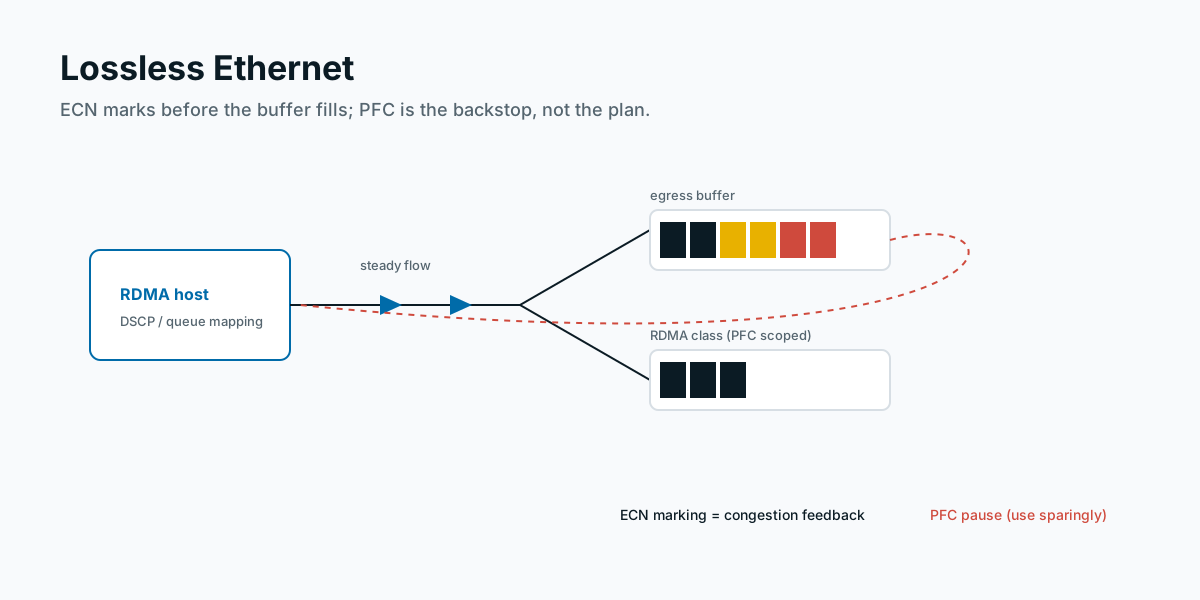
RoCEv2 lets you run RDMA over a standard Ethernet fabric, which is exactly why it is attractive and exactly why it is easy to get wrong. RDMA assumes a network that behaves. Ethernet does not behave by default. The design work is in closing that gap deliberately.
Start with a lossless plan, not a device
The common failure mode is to configure features on individual switches and hope the fabric behaves as a system. RoCE is a fabric-wide property. Before touching a device, define:
- Which traffic classes carry RDMA and how they map to queues.
- Where congestion is expected (spines, uplinks, storage) and how it will be signalled.
- The MTU end to end, including host interfaces and any overlay.
- The failure and reroute behaviour under load.
PFC: necessary, but not sufficient
Priority Flow Control prevents drops for a class by pausing the sender. Configured carelessly, it creates a different problem: head-of-line blocking and pause storms that spread congestion across the fabric.
Practical rules that hold up:
- Keep PFC scoped to the RDMA class, and make sure the priority mapping is consistent on every link.
- Watch for PFC pause counters as a first-class health metric, not an afterthought.
- Treat sustained pause as a design signal — buffers and congestion control need attention.
ECN: bring congestion feedback under control
ECN marks packets before buffers fill, letting the endpoints slow down without dropping. The thresholds are workload-dependent, and the “right” values depend on buffer depth, link speed and the number of concurrent flows.
The mistake is treating ECN thresholds as static defaults. They should be tuned against the actual collective traffic and monitored. A fabric that shows heavy ECN marking is telling you something useful; a fabric that shows none under load may not have ECN doing its job.
Buffers, QoS and the host side
The host is half the network. NIC firmware, DSCP marking, queue configuration and driver settings all change fabric behaviour. Align the host DSCP mapping with the switch QoS policy, and validate it — an inconsistency here quietly breaks the whole lossless design.
Validation is the deliverable
A RoCE design is not finished when it is configured. It is finished when you can demonstrate:
- RDMA traffic traverses the expected path and class.
- PFC, ECN and queue counters behave under realistic load.
- Collective performance is stable, not just fast on average.
- A link or spine failure degrades predictably and recovers cleanly.
Automate those checks and treat them as regression tests for the fabric. If a change cannot be validated against them, you do not yet know what it did.